
No products in the cart.
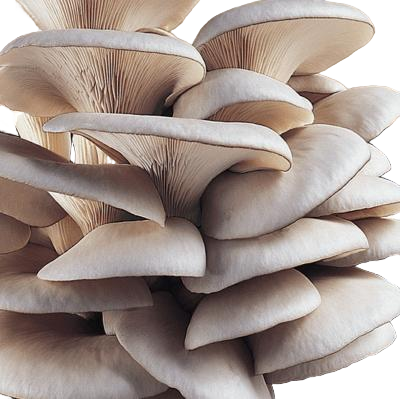
Commercial Grey Oyster Mushroom (Pleurotus pulmonarius) | The Summer All-Rounder �� The Versatile “Summer” Oyster While the White Oyster (P. ostreatus) is the heavy-hitter for the “Braai” market, the Grey Oyster (Pleurotus pulmonarius) is the grower’s secret weapon for year-round stability. Often referred to as the Summer or Italian Oyster, this species is naturally more heat-tolerant and “opportunistic” than its cousins. It is the perfect choice for South African growers who need a mushroom that keeps producing through the warmer months without requiring expensive climate control to trigger fruiting. It has a high biological Efficiency [like the White], but with smaller fruiting bodies often preferred by commercial growers as easier to package – and often the Oyster found in store. �� Colour & Morphology Unlike the White Oyster—which can pin blue but matures into a beige/white—the Grey Oyster maintains a sophisticated, soft grey-to-tan palette throughout its life cycle. The Caps: These are typically smaller and more delicate than the massive “Braai” White Oyster, but they grow in much denser, more prolific clusters. The Texture: P. pulmonarius is prized for being slightly more tender and “velvety” than P. ostreatus, making it a favorite for delicate pastas and creamy sauces where a softer bite is desired. ���� STS Cultivation Insights: The “No-Stress” Mushroom At our Sustainability Testing Station, the Grey Oyster has proven itself as the most “set-and-forget” variety in our collection. No Cold-Shock Required: Unlike many ostreatus strains that need a drop in temperature to “pin,” the Grey Oyster will fruit spontaneously as soon as it has colonized the substrate and senses fresh air. Rapid Cycle: This strain is exceptionally fast. You can often move from inoculation to first harvest in as little as 18–21 days. Broad Substrate Range: It is an aggressive decomposer, thriving on everything from straw and coffee grounds to supplemented sawdust. ��️ Airflow & Environment Because P. pulmonarius has a very high metabolism, it is a heavy “breather.” Fresh Air Exchange (FAE): It is sensitive to $CO_2$. If your stems are getting long and your caps are staying small, it’s a signal to ramp up the FAE. Resilience: It is less prone to “damping off” in high humidity than the thicker-fleshed White varieties, making it easier to manage in humid fruiting tents. Quick Cultivation Facts: Scientific Name: Pleurotus pulmonarius Flavor Profile: Mild, slightly sweet, and very tender. Fruiting Temp: 18°C – 28°C (Highly adaptable). Pro Tip: Because they fruit so fast, harvest them just as the edges of the caps begin to flatten out but before they curl upwards to maximize shelf life.
Brand
Kaspersky